MAP of INDIGENOUS AUSTRALIA
The notion of Aboriginal Australians is generalized, and it talks about all the natives of Australia. However, each area has its specificities, and each community is unique.
This map vaguely represents the borders between different tribes or languages and dialects.

Click to zoom
Click to zoom
A sight to see:
Uluru-Ayers Rock
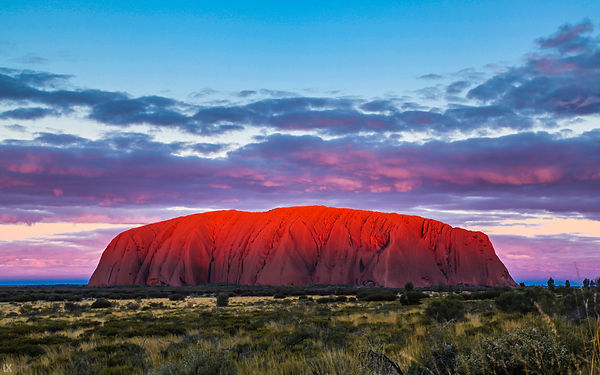
Uluru is an important destination for most tourists who visit Australia. However, it holds a deeper meaning to the Aboriginal people who inhabit the area.
Archeologists believe that this monolith was formed 60 million years ago. Originally, the region of Uluru belonged to the Anangu people, an Aboriginal group, who lived on this land for more than 60 000 years. It was until 1873 when explorer William Gosse discovered the site and named it after the Chief Secretary of South Australia, Sir Henry Ayers. Since then, the monolith’s name is the combination of both terms: “Uluru” and “Ayers Rock”.
The rock’s name “Uluru” translates to “Great Pebble” and it can change colors throughout the day, depending on the position of the sun. It glows red during sunrise and sunset. The monolith has a great cultural significance because it is tied to the Dreaming stories. Furthermore, this site holds a religious stature and is very sacred for the Anangu people because it is believed that it is a resting place for ancient spirits.
